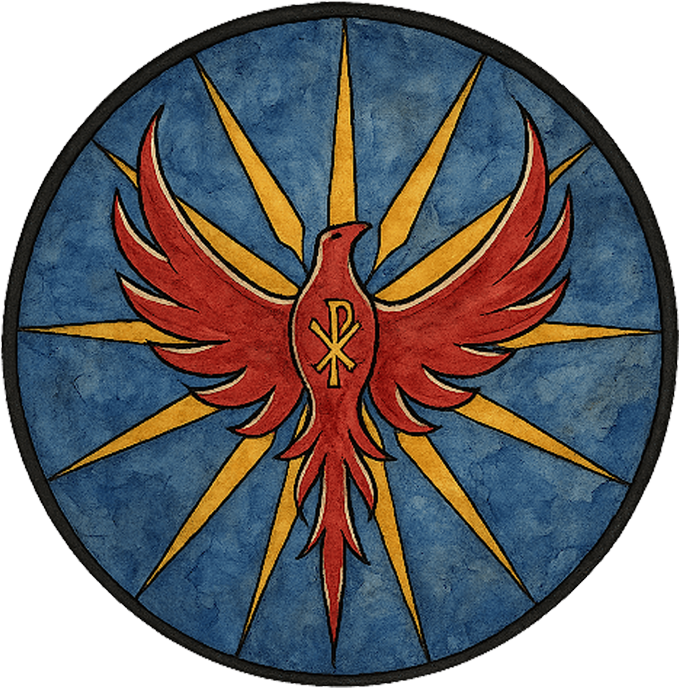
1485 – 1715
🎨
The Renaissance Era
Rebirth and Reformation — the revival of classical learning, the great artists, the Reformation, and the age of exploration.
“Here I stand; I can do no other. God help me.”
— Martin Luther, Diet of Worms, 1521
Overview
Why Study the Renaissance World?
The Renaissance and Reformation era was a period of rebirth, rediscovery, and revolution. Beginning in the Italian city-states and spreading across Europe, this era saw the revival of classical learning, the explosion of artistic genius in da Vinci, Michelangelo, and Raphael, the invention of the printing press, and the voyages that connected the Old World to the New.
But the most consequential event of this period was the Protestant Reformation. When Martin Luther nailed his 95 Theses to the door at Wittenberg, he ignited a movement that transformed not only the Church but Western civilization itself. Sola Scriptura, Sola Fide, Sola Gratia — Scripture alone, faith alone, grace alone — these principles reshaped theology, politics, education, and the lives of ordinary people.
The Renaissance and Reformation also launched the Scientific Revolution, as faithful Christians like Copernicus, Galileo, and Kepler read 'God's other book' — the book of nature.
Classical Christian Education
The Renaissance Era & the Trivium
The Reformation put classical Christian education back into the hands of the people. Luther insisted that every child — boy and girl — should be educated, and he championed the liberal arts as essential to forming wise citizens and faithful Christians. Calvin established the Geneva Academy, a model for classical schools for centuries. Shakespeare's plays, Milton's poetry, and Bunyan's allegories are the fruit of a culture steeped in Scripture and the classics. This is the era when classical Christian education became a movement.
Grammar Stage
Students master the key dates and figures: the Medici, Luther, Calvin, Henry VIII, Shakespeare, Galileo. They learn the geography of the Reformation, the structure of Renaissance art, and the timeline of exploration and colonization.
Logic Stage
Students analyze the theological arguments of the Reformation: What did Luther actually teach? How did Calvin's theology shape Geneva — and eventually America? Was the Counter-Reformation a genuine reform or a defensive reaction? They evaluate the relationship between science and faith.
Rhetoric Stage
Students read Luther's writings, Shakespeare's plays, Pascal's Pensées, and Milton's Paradise Lost. They write research papers, stage scenes from Shakespeare, and debate the great theological controversies of the era in Socratic seminars.
Essential Questions
Questions That Shape the Journey
What did the Reformers recover that the medieval Church had obscured?
How did the printing press change the course of civilization?
Can great art serve as a vehicle for theological truth?
How did the Scientific Revolution grow out of a Christian worldview?
What lessons does the colonial encounter teach about faith and power?
Great Books
Key Texts of the Renaissance Era
95 Theses
Martin Luther
Institutes of the Christian Religion
John Calvin
Hamlet / Macbeth
William Shakespeare
Pensées
Blaise Pascal
Paradise Lost
John Milton
What's Inside
16 Topics to Explore
Sign in to access lessons, quizzes, discussions, and more.
Italian Renaissance Origins
Florence, the Medici, and the rebirth of classical ideals.
Renaissance Art
Da Vinci, Michelangelo, Raphael — beauty in service of truth.
Renaissance Humanism
Petrarch, Erasmus, and the rediscovery of ancient wisdom.
The Reformation
Luther, Calvin, Zwingli — sola scriptura, sola fide, sola gratia.
Counter-Reformation
The Catholic response and the Council of Trent.
Age of Exploration
New worlds, new encounters, and the spread of the Gospel.
Scientific Revolution
Copernicus, Galileo, Kepler — reading God's other book.
Shakespeare
The Bard and the summit of English dramatic literature.
Renaissance Music & Architecture
Polyphony, domes, and the harmonies of creation.
Rise of Nation-States
The emergence of modern political boundaries and sovereignty.
Descartes, Pascal, Bacon
Philosophy at the crossroads of faith and reason.
English Reformation
Henry VIII, the English Bible, and Puritanism.
Colonial America
Pilgrims, Puritans, and the city on a hill.
Thirty Years' War
Religious conflict and the reshaping of Europe.
Baroque Art & Culture
Drama, grandeur, and the art of the Counter-Reformation.
Enlightenment Prelude
The ideas that set the stage for the modern world.
Ready to explore the Renaissance era?
Sign in with your Boise Classical Academy account to access the full curriculum — lessons, quizzes, Socratic discussions, and virtue tracking.